
Creativity’s Coming Reckoning
Evidence and an AI Trailblazers Summit Test

We are entering what may become the defining leadership test of our era. While AI is beginning to reshape how companies operate, the deeper and more destabilizing disruption sits squarely in a realm leaders have long taken for granted: the future of creativity inside organizations. And while it is still early to measure the full impact, a series of academically rigorous experiments point to what may already be shifting in real time.
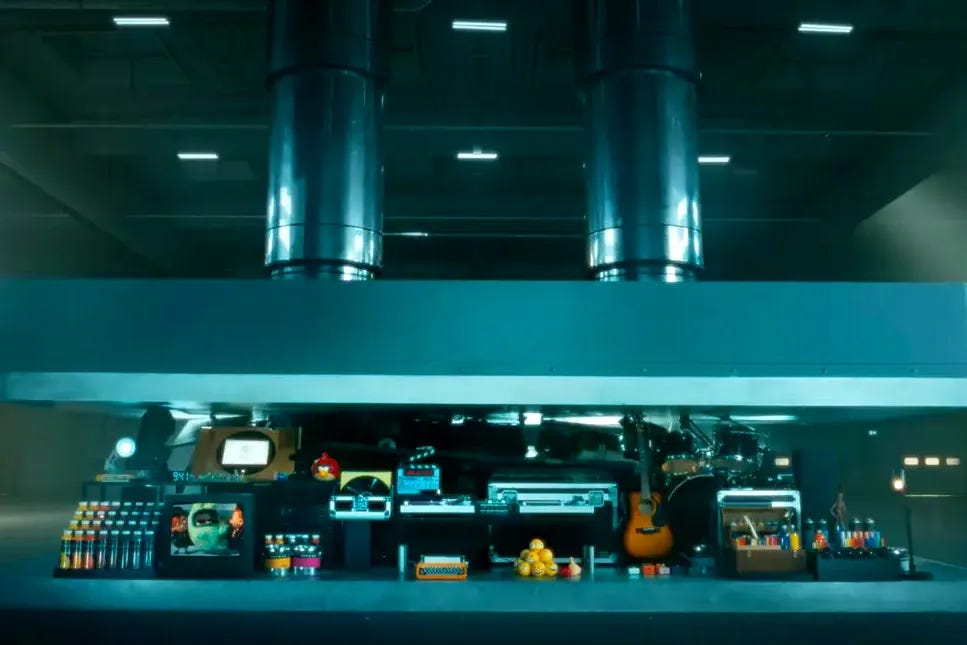
In this piece, I break down several of those insights and explore what they signal for creativity in the workplace (hint Apple may have been onto something with its Apple iPad Crush ad). With the recent launch of Nano Banana Pro from Google, the previews coming out of Adobe Max 2025 and Canva’s new Design Model announcement, this is the right moment to revisit the creativity conversation once more. I also preview a unique live test we will be running at the AI Trailblazers Winter Summit on December 4th in New York. (If you haven’t bought your ticket yet, now would be the time. This summit is shaping up to be our strongest one yet.)
For me, this moment feels especially vivid. In conversations with Chief Marketing Officers, Chief Creative Officers, Executive Creative Directors, founders and board members, the tension around AI and creativity is no longer abstract. It is personal. You can feel the excitement, but you can also sense the genuine and understandable unease, the quiet questions about identity, craft and what this shift means for people who have built careers around creativity. That tension is exactly why the research matters, and why we need to confront it with clarity and sensitivity rather than clichés or avoidance. And doing that well means examining this moment without carrying forward the biases that once shaped how creativity was judged.
The Bias No One Wants to Admit
Research is painting a far more complicated picture of how humans react to AI-generated creativity than many a creative director may want to tell you. In “Humans as Creativity Gatekeepers: Are We Biased Against AI Creativity” and “Implicit Bias Against AI Creativity,” scholars show something that should worry every executive leader responsible for innovation or marketing. Creative leaders carry a measurable bias against AI-created work. When they believe something was made by AI, they rate it as less creative even when it’s identical to a human-produced version.
The reason is surprisingly simple. We instinctively assume AI doesn’t exert effort, and decades of equating effort with creative value bias us before the work is even evaluated. We also don’t want to believe that AI-generated creativity can match what humans produce. If it could, then what remains uniquely human? That’s too frightening a thought for many of us to contend with. Even more striking (and confusing) is the implicit bias uncovered through mouse-tracking research. Participants’ physical movements gravitated toward the human-labeled option even when they consciously selected the AI one. The bias isn’t just in judgment. It is deeper and more instinctual.
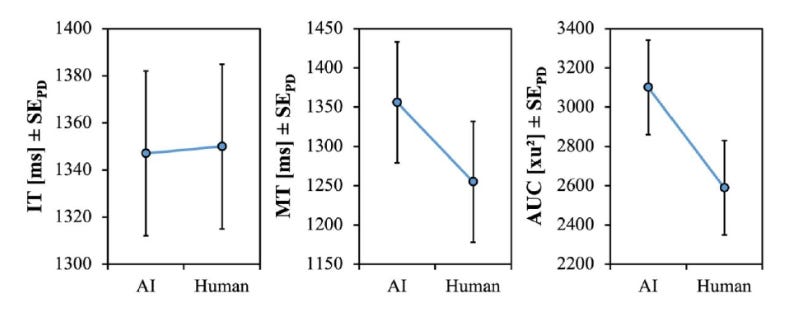
Inside companies, this reflex becomes a structural barrier. Creative leaders, the gatekeepers of what gets the thumbs up and ultimately gets resourced, tested and produced, may be unconsciously filtering out ideas and concepts generated by the very systems capable of expanding their teams’ creative range. If we dismiss AI-generated ideas simply because of who or what made them, we limit the creative potential of this new era before it even has a chance to show itself. Put differently, if you rely solely on creative leaders to judge whether AI tools and technologies can make the work better, more effective and more efficient, you may be getting skewed feedback that prematurely dismisses the technology.
The Real Fear: Erosion, Not Replacement
The second insight emerging from the research is far more existential. Creativity inside organizations has always reached well beyond marketing assets. It drives innovation, shapes product strategy, informs consumer insights and influences major executive decisions. For decades, these areas have been considered firmly human territory.
Now AI is moving directly into that space. AI systems can generate strategic concepts, imagine new business models and propose fresh creative directions, capabilities once viewed as uniquely human. For creative and innovation leaders, this creates a profound psychological shock. It threatens the very work that has defined their expertise. It raises uncomfortable questions about their professions, their careers and the meaning of having spent years or decades mastering a craft that suddenly feels exposed.
Resistance to AI is not only a fear of being replaced. It is a fear of erosion. When the parts of the craft that once made someone indispensable are automated, the question of what remains becomes far more piercing than many leaders acknowledge. And the popular claim that AI will simply free people for higher-order work often breaks down in reality. In many creative roles, what is being automated is the higher-order work. Once that disappears, there is not much left to fall back on. We may reach a point in the future where AI can credibly simulate human imagination and lived experience so convincingly that we struggle to tell the difference.
But there is hope, and it comes from another insight emerging in recent research. The paper “Appreciation Processing Evoking Feelings of Being Moved and Inspiration: Awe and Meaning-Making” shows that inspiration comes not from technical beauty but from engaging with meaning, intention and emotional resonance. As AI takes on more of the aesthetic execution, the human edge begins to shift. It moves toward interpretation, meaning-making and the emotional intelligence required to shape ideas that truly connect
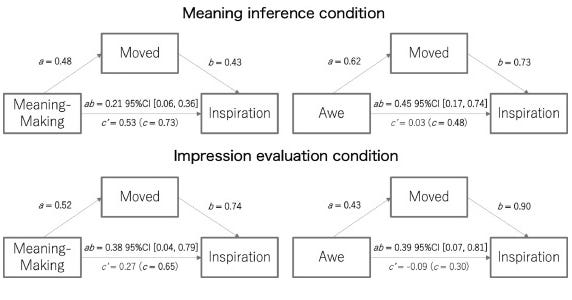
After all, at least for the foreseeable future, only humans see the world through the lens of lived experience, a perspective that remains uniquely our own. This is where our advantage lies. This is the next frontier of human differentiation - meaning making.
A Live AI Trailblazers Test: When AI Really Creates
This is exactly why we are putting AI-driven creativity on stage at the AI Trailblazers Winter Summit. It is time to see, in real time, how far the tools have come and how leaders respond when AI-generated work is right in front of them.
First, three award-winning creative teams are taking a live brand brief from an industry-leading brand and producing ads using only AI. These will be full video concepts, including TV-quality work that could run nationally. After revealing the work at the summit (with the guests voting on which they thought was the best), I will sit down with the teams and ask the questions every leader is beginning to ask. Did the work hold up. What trade-offs emerged. Where did the tools elevate the craft and where did they fall short. And most importantly, what does it feel like to hand part of your creative identity to a machine.
Second, Mondelez International will demonstrate their in-house AI-powered global creative production platform that’s cutting costs by 30%-50% and was recently covered by Reuters. This is not a prototype. It is a scaled system generating text, images and video across multiple markets and pushing agencies to rethink process, roles and the very meaning of craft in real time.
The through line across all of this is clear. Creativity is becoming a hybrid capability built at the intersection of human judgment and machine-generated possibility. That intersection is exciting, but it is also understandably unsettling. It requires leaders who can grasp the psychological reality of this shift and guide their teams toward new forms of creative strength.
The organizations that will win are the ones that create space for experimentation, remove the fear surrounding these tools and double down on the human capabilities that now matter most: meaning-making, taste, narrative depth, synthesis and emotional resonance.
The test is no longer theoretical. It is here. And the leaders who rise to it will define what creativity looks like for the decade ahead.
Where I’ve been
A whirlwind trip to New York landed me at the Alpha Board Governance Summit, where I had the opportunity to pinch-hit and join a panel to discuss AI governance and what I consider to be the leadership test of our times. Companies and their boards now face a clear imperative to drive the rewiring of their organizations for the AI era, and to do so with responsibility, seriousness and real diligence. It may be tempting to move fast, but without the right guardrails that speed becomes fragility; with the right guardrails it becomes agility.

Serving for eight years on the board of United Rentals, a fast-growing Fortune 300 company powered by an exceptional management team and phenomenal employees, has taught me a great deal about the enduring principles of corporate governance. AI enthusiasm should not upend those principles. We all need to move quickly, but never at the expense of our responsibilities to shareholders, employees, customers, society and one another.
It was also a treat to hear old friends and board members like Joe Marchese (ClearChannel & National Cinimedia), Carolyn Everson (Coca Cola & Walt Disney) and Laura Desmond (Adobe & DoubleVerify) speak. Congratulations to Steven, Alvin and the Alpha team for hosting another successful governance summit
What I’m reading
The future of marketing looks a lot like engineering (Search Engine Land)
Top Startups To Watch From Y Combinator’s Fall Batch (Forbes)
Gemini 3 is almost as good as Google says it is (The Verge)
All of My Employees Are AI Agents (Wired Magazine)
AI progress and recommendations (OpenAI)
What I’ve written lately
AI’s Next Frontier: Making Us More Human (October 2025)
Why Leadership with Heart Still Matters (October 2025)
AI’s Fork in the Road for Marketers (September 2025)
Is Search Really Going Away (August 2025)
The Myth of Creative Immunity (July 2025)
Great article, Shiv.
I've recently had a book published, 'Quiver, don't Quake - how Creativity can embrace AI' (Mensch Publishing - https://www.amazon.com/Quiver-dont-Quake-Creativity-Embrace/dp/1912914891/ ) that explicitly looks at how human and 'AI psychology' intertwine, and what it means not only for people at work, or who currently produce artefacts, but for all 8 billion of us who inhabit this planet.