
Authenticity Is Dead (Again)
What Adam Mosseri’s anxiety tells us about business, belief, and visual truth

Before diving into the main story, a few headlines worth noting.
At CES 2026, General Catalyst CEO Hemant Taneja emphasized AI's pivotal role in helping companies scale faster and increase enterprise value. He pointed to sectors like healthcare, fintech, and logistics where AI is driving measurable performance gains. The message: AI is not just innovation, it’s a core growth multiplier already. Watch the full conversation.
Google introduced new Gemini-powered AI agents aimed at reshaping e-commerce by enhancing personalization, customer engagement, and operational efficiency. The WSJ reports that retailers like Carrefour are piloting these tools to create conversational shopping experiences that mimic in-store assistance. This signals a shift toward intelligent digital storefronts, directly impacting how brands design customer journeys.
Chipmaker Arm created a new “Physical AI” unit to support robotics and autonomous systems, aligning with growing industrial interest in hardware-driven AI according to Reuters. The unit targets sectors like automotive, manufacturing, and logistics, emphasizing the convergence of software intelligence and physical machines. This move positions Arm as a key enabler of AI-powered automation infrastructure.
When Seeing Stops Believing
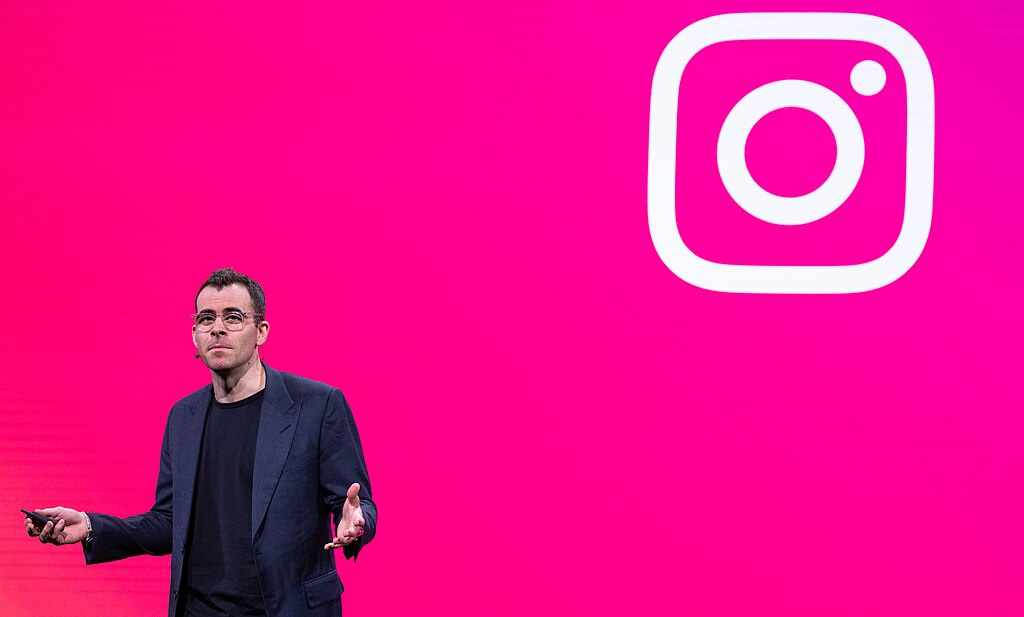
Instagram boss Adam Mosseri’s much discussed year end reflection on AI reads less like a product memo and more like a confession, with real consequences for how brands are built, as my friend and marketer extraordinaire Musa Tariq noted on LinkedIn.
We can no longer trust what we see. Images and videos, once assumed to be evidence of reality, are now infinitely generatable, infinitely malleable, and increasingly unmoored from truth. In Mosseri’s telling, the Internet is entering an era where skepticism replaces sight and platforms must scramble to invent new signals of credibility.
He is not wrong in his diagnosis. We are undeniably crossing a threshold. Where his framing falters, however, is in assuming that people care as much about factual accuracy in the way we hope they should. Ironically, Meta is partly to blame, having allowed misinformation to spread like a virus across its platforms over the years. The real insight is not that AI breaks trust, but that trust has not been grounded in pixels for quite some time. Trust me, I know. I wrote an award-winning book on misinformation and how it spreads online back in 2018.
For most of modern media history, we treated visual realism as a proxy for truth. A photograph meant something happened. A video meant someone was there. Social media amplified that logic by rewarding spectacle at scale. Now AI has collapsed that entire system. Anyone can generate cinematic imagery, emotional scenes, even “candid” moments on demand. When perfection becomes cheap, it stops signaling credibility at all.
Mosseri suggests that this will push us toward rawness, toward imperfection, toward unpolished content as a new authenticity signal. But this is where the argument slips into nostalgia. Imperfection is not a safeguard. It is just another style for an AI tool. AI already knows how to fake blur, noise, shakiness, awkward framing, and emotional cues. The idea that “real” will be protected by rough edges misunderstands what authenticity actually is and is arguably, overly simplistic.
Authenticity Was Never About Accuracy
Authenticity has never truly been about accuracy. It has always been about alignment. People believe what fits their identity, their worldview, and their emotional needs. If something entertains us, we forgive its factual looseness. If something inspires us, we stop interrogating its source. Just read the shocking New Yorker piece on Dan Ariely to see what I mean. And if something moves us, we rarely ask how it was made. We live in our heads far more than we live in objective reality, a tendency that has only intensified as our screen time has increased.
That is why the real implication of Mosseri’s warning has little to do with labeling AI content or cryptographically signing images. This is not a technical crisis. It is a meaning crisis. In a world where reality is negotiable, narrative becomes the dominant currency.

We are already watching this play out most visibly in politics, where AI-assisted imagery and messaging are not displacing belief but accelerating it. People are not persuaded by proof. They are persuaded by ideas that reinforce what they already believe. They do not ask, “Is this real?” They ask, “Does this feel true to me?” and “Is it what I want to believe?” You only have to follow how the fatal shooting of Renee Good by an ICE agent in Minneapolis and the ensuing political reactions have been interpreted online and in the media to know what I mean. The same dynamic is beginning to take hold of how we relate to brands.
You can already see this in how consumers relate to brands that sell belief more than proof. Take wellness, sustainability, or financial empowerment. Few customers are auditing supply chains, reading clinical studies, or validating carbon offsets. They are buying into a story that aligns with how they see themselves and the future they want to belong to. The brand that wins is not the one with the most verified claims, but the one with the most coherent and believable narrative. One that feels consistent across product, language, partnerships, and customer identity. In an AI-saturated world, bizarrely, alignment with values outperforms factualness.
Brands in the Age of Belief Economies
For brands, this marks a profound shift. The competitive advantage no longer lies in product specifications, polish, or even results often. AI has flattened those advantages completely. The advantage now lies in point of view and the discipline to express it consistently. In the ability to frame the world in a way that feels meaningful, stable, and emotionally resonant over time with a target audience.
In that sense, Mosseri is right about one thing, even if he understates it. We will care more about who is speaking than about what is being shown. But not because creators can prove they are real. Because trusted voices provide context in a world drowning in content. They tell us how to interpret what we are seeing, not whether it is authentic by some technical definition.
This is where brands will either evolve or disappear. The brands that win will not compete with AI on creativity as output. They will become the ultimate AI creatives by orchestrating meaning rather than manufacturing assets. They will stop thinking like advertisers and start thinking like narrative systems. Less about campaigns. More about worldview. Less about authenticity theater. More about belief architecture.
There is a quiet irony running through Mosseri’s essay. Instagram, like every major platform, helped train audiences to equate visibility with value and aesthetics with truth. Now that same system is being overwhelmed by the very tools it enabled. Platforms may try to restore trust with labels and signals, but businesses cannot afford to wait for that rescue.
Mosseri is right to warn us that seeing is no longer believing. Where the warning falls short is in assuming that belief ever truly depended on seeing in the first place.
Reality is no longer the point. Meaning is.
We are entering an era where desired belief outranks proof, where narrative outranks authenticity, and where context matters more than content. Brands are no longer just communicating. They are hosting belief economies. The winners will not be the ones who prove what is real. They will be the ones who decide what matters.
That is the uncomfortable, exhilarating challenge ahead.
Five takeaways for marketers
Stop treating authenticity as a production problem. No amount of raw footage, behind-the-scenes content, or “unpolished” aesthetics will protect you from AI commoditization. Authenticity is not how content looks; it is how consistently a brand shows up with intent, values, and point of view.
Invest in narrative coherence, not content volume. When audiences are flooded with infinite AI-generated media, they gravitate toward brands that help them make sense of the world. Your job is not to say more things more often, but to say fewer things with greater clarity and emotional continuity.
Assume belief beats proof even if that feels wrong. Marketing strategies that rely on “educating” customers with facts will struggle in a post-visual-truth environment. Strategies that connect to identity, aspiration, and worldview will outperform, even when the facts are fuzzy or incomplete.
Treat AI as a creative reality, not a creative replacement. The winning teams will use AI to scale expression, test narratives, and explore new formats, while humans remain responsible for meaning, judgment, and cultural sensitivity. Creativity shifts from execution to orchestration.
Finally, recognize that your brand is now a trust interface. In a world where people cannot rely on what they see, they rely on who they know. Every interaction either strengthens or weakens that trust. Marketing is no longer about persuasion alone. It is about stewardship of belief.
Where I’ve been

I took two weeks off and spent time in nature at a tiger reserve in northern India. We saw tigers, which was magical, but in many ways the real power came from slowing down, reflecting, and being truly present. It was a healthy and grounding respite just before the sharp contrast of the Consumer Electronics Show in Las Vegas that awaited me.
What I’m reading
The Claude Code workflow worth mimicking (VentureBeat)
To take advantage of AI, marketing must evolve (Fast Company)
A Tale of Two Workforces. Winners & Losers (Indeed Hiring Lab)
40 Most Helpful AI Tips from 2025 (Google)
AI trends from the buy side and sell side (Constellation Research)
What I’ve written lately
The Wrong Code Red (December 2025)
AI’s Next Frontier: Making Us More Human (October 2025)
Why Leadership with Heart Still Matters (October 2025)
AI’s Fork in the Road for Marketers (September 2025)