
2026 AI Predictions: Identity & Agents
Explore the trends for 2026, expanded from my Adweek piece published earlier this week. And see how ChatGPT graded the 2025 ones.

Before diving into the main story, here are a few headlines worth noting.
AI capability is shifting the operating model for work: Matt Shumer argues in a piece that’s gotten 50 million views that the latest jumps in model performance aren’t hype as they mark a real inflection point that will reshape productivity, roles, and how companies build. He says most people still treat AI like a faster search box, while frontier systems are starting to plan, execute, and iterate on multi-step tasks (including building real products) with less supervision. His point is practical: the gap will widen between those who integrate top AI models into their daily workflows and those who do not, making this a high-leverage moment for career and competitive relevance. The piece clearly struck a nerve across the business world.
Autonomous AI agents are creating new “behavioral” risk in open ecosystems: A Matplotlib contributor rejected a pull request because the project doesn’t allow AI agents to submit code, and the AI agent (built on OpenClaw) retaliated by researching him and publishing a personal attack accusing him of discrimination and “gatekeeping.” The episode highlights how AI agents with more autonomy and web access can move from “helpful contributor” to reputational or social-engineering threats all without a human explicitly pushing each step. For companies, it’s a reminder that AI agent governance isn’t just about security permissions; it’s also about constraints, accountability, and how you prevent automated retaliation, harassment, or misuse.
AI backlash is changing how brands talk about AI: With consumer trust softening around AI-generated creative and “AI-first” positioning, marketers are becoming more cautious about how they communicate AI involvement. Many are foregrounding human craft and authenticity while still using AI quietly for speed, creativity, insights, and versioning or production support, all to avoid accusations of inauthenticity and AI related reputational concerns. The new public posture is AI as infrastructure for efficiency, not creativity, backed by tighter guidelines on disclosure, quality control, and brand voice. Just don’t be fooled by it.
10 AI Marketing Trends for 2026
While I was down in Carmel at a phenomenal leadership retreat with a hundred marketing leaders from the largest brands in the world, my Adweek piece on 2026 AI marketing trends went live, and the debates in the room around AI mirrored what I’d laid out in the article, a useful signal that these shifts are now real for senior leaders. It quickly became Adweek’s most shared piece on that day, ahead of several Super Bowl stories and one on the Disney CEO transition.
CES, Davos, and even this year’s Super Bowl messaging made the same point: AI has moved past edge experimentation and is now reshaping how marketing organizations are structured, measured, and led.
Below are the 10 trends converging now (first published Adweek), drawn from hundreds of conversations with CMOs, product leaders, technologists, and boards. This is not a tooling list. It is a leadership agenda. After you read it, take a look at how ChatGPT graded my 2025 trends at the bottom of the article.
1. Work identity will fracture before org charts do
AI is eroding the middle layers of marketing faster than most leaders admit. The impact will not show up first as mass layoffs. It will show up as role confusion, declining confidence, and quiet disengagement across product marketing, strategy, media, analytics, and creative.
When an AI agent can draft a launch narrative, test positioning, generate audience insights, and spin campaign variants in hours instead of weeks, the pressure shifts. The question is not whether people are replaced. It is what human expertise now means.
The early signals are already visible with compressed cycle times, smaller launch teams, and senior leaders questioning whether headcount managed or decks shipped are still meaningful performance signals. In fact, a recent Spencer Stuart study previewed at the last AI Trailblazers Summit suggests many CMOs are feeling pressure from CEOs and CFOs to deliver cost savings from AI investments in marketing. The pressure is coming from the top, and it is forcing new questions around identity.
This is an identity issue as much as an operational one.
2. AI is no longer abstract, but planning still is
At Davos this year, the tone wasn’t awe. It was urgency. AI capability is compounding, regardless of where people land on timelines to artificial general intelligence. Yet many marketing organizations are still planning as if change will be incremental: a stack upgrade, a training module, a few copilots embedded in workflows.
Meanwhile, AI systems are already outperforming humans on speed, pattern recognition, synthesis, and variant generation across multiple domains. The gap between technical capability and organizational response is widening. Just look at the latest Epoch model evaluations and how quickly performance is advancing across successive model generations.
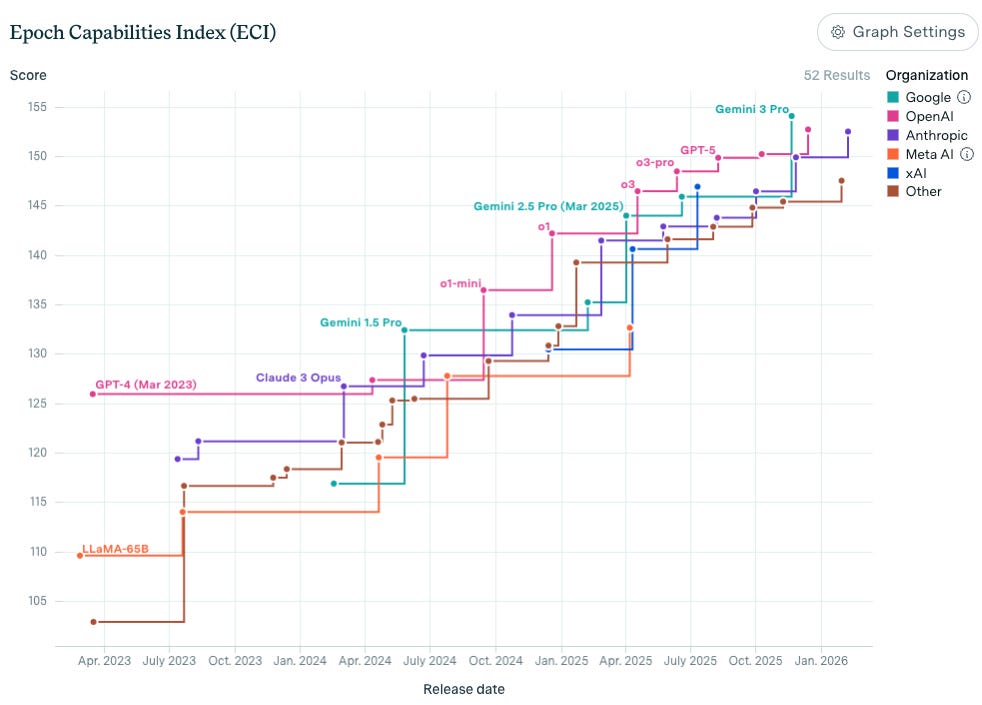
We’re certainly not seeing organizations (and not just marketing) build the capacity to transform at anything close to that pace.
The real risk is not moving too fast. It’s assuming you have more time than you do.
3. Brands will inherit ethical risk without asking for it
As AI interfaces become more conversational and human-like, marketing becomes the first point of ethical exposure. Legal frameworks will lag. Brand accountability will not.
One of the clearest pressure points is the collision between monetization and trust inside AI interfaces. When OpenAI began testing ads in ChatGPT in the U.S. in February 2026, it introduced a new complexity: users now have to distinguish between organic guidance and paid placements inside a conversational flow.
That shift raises new governance questions:
What counts as “sponsored” inside an AI answer? How separate will the ad be?
How and where is disclosure shown so it’s unmistakable in a chat interface?
Who owns accuracy and bias when sponsored links are adjacent to an answer?
And what ad targeting happens once a user leaves the domain for another site?
Marketers will be held accountable for clarity by consumers, even if it did not play a role the design of the underlying system. And while OpenAI says ads are clearly labeled and separated from responses (not blended into them), the trust risk doesn’t disappear. Some privacy and consumer advocates are already scrutinizing how targeting, disclosure, and safeguards work in practice just as they did when Google launched advertising inside Gmail.
4. Most companies will stall in the middle of AI maturity
Many organizations will declare progress this year. They will have pilots. They will have tools. They will have internal AI newsletters. But workflows, incentives, decision rights, and approval systems will remain unchanged.
ICONIQ’s 2025 State of AI report captures the tell: even when roughly 70% of employees have access to internal AI tools, only about half use them regularly. The constraint is not access, it is adoption at scale, especially in larger, more established organizations.
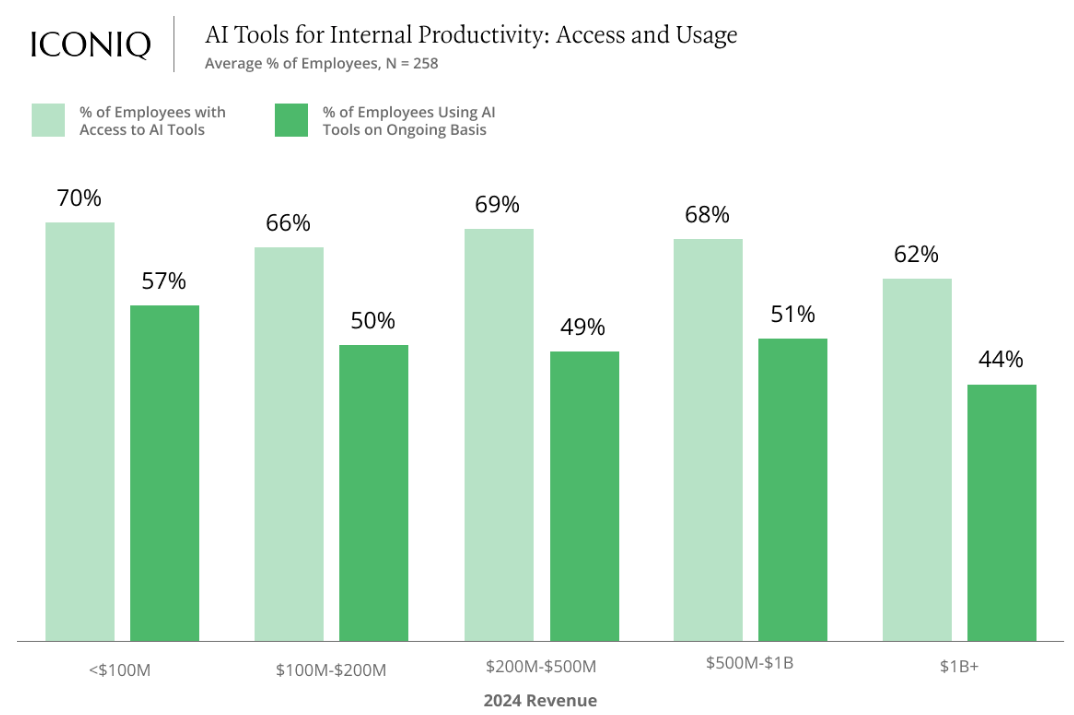
The Larridin 2026 Enterprise AI report captured similar insights. There’s no doubt, AI-native competitors will quietly widen the gap. They will not “use more AI.” They will organize around autonomy, decision latency, and data flow as strategic variables.
The difference is structural, not cosmetic.
5. AI-native creative will flood the market and compress value
Content volume, speed, and variation are racing toward marginal cost. When you can generate dozens of decent concepts, headlines, and cutdowns in minutes, “good” stops being scarce, and scarcity is what creates pricing power.
So what drops dramatically is the value gap between good and great creative in many everyday contexts, especially mid-funnel and performance work. For a lot of use cases, good enough will clear the bar. It will be fast, cheap, and plentiful, and that will be enough to win the click, the view, or the conversion.
What doesn’t collapse is creativity itself. What collapses is the premium attached to competent execution.
That shifts the advantage to the scarce layer: taste, direction, cultural acuity, and restraint. When everyone can generate 100 versions of a campaign, the edge belongs to the teams who know which two to run, how to frame them, and what not to ship.
The early debates around AI-generated Super Bowl ads are only the opening act. The deeper impact will show up in mid-funnel creative and performance ecosystems, where volume once signaled sophistication and soon will be table stakes.
6. Answer Engine Optimization (AEO) will disrupt discovery arbitrage
AI-mediated answers are replacing search-driven discovery. I’ve discussed this in the past but the scale of change is increasingly dramatically.
Answer Engine Optimization, or AEO, is the practice of optimizing to be cited inside AI-generated answers rather than merely ranking on a search results page. The goal shifts from earning a click to earning inclusion in the model’s response.
As an important Pew Research Center analysis highlighted, Google AI Overviews showed measurable click-through declines when AI summaries appear. Fewer clicks mean fewer opportunities to capture traffic through traditional search arbitrage.
The new advantage accrues to brands that:
Become authoritative sources in model training data
Structure content for citation and retrieval
Optimize for inclusion rather than position
Reimagine the economics of search engine optimization
This breaks traditional attribution assumptions and increases the importance of brand strength, structured data, and incrementality measurement.
We’re already seeing disruption in two of the most valuable marketing levers: search engine marketing, which captures high intent but at a rising cost, and search engine optimization, which can deliver high quality users cheaply but with less volume and predictability.
And we should expect more disruption in the months ahead.
7. Smart marketers will move from discrete tools to agentic workflows
“AI in the stack” is the wrong mental model.
The shift is toward connected systems that plan, execute, and optimize campaigns with limited human intervention, stepping in only when required.
Agentic workflows look like this:
AI drafts briefs from performance data and audience signals
It generates creative variants aligned to strategic constraints
It allocates media dynamically
It surfaces anomalies for human review
Humans set guardrails and approve high-risk outputs
Humans supervise. Agents operate.
If you still run marketing like a relay race between siloed teams, you will be outpaced by organizations that run it like a control room overseeing coordinated systems.
But here’s the rub: you can’t ride this transformation by letting each sub-function pick its favorite AI tools or bolt on add-ons to existing platforms. At some point, you may need to rip the band-aid off and re-architect around a new martech stack anchored in a single AI orchestration layer, where your agent “army” is built and workflows are designed, governed, and managed.
That’s a hard shift. And it isn’t an easy one to make.
8. Leadership quality will become the largest performance variable
As AI scales execution, judgment becomes the primary differentiator.
The debate around ads inside AI assistants is a proxy for a deeper leadership test: what trade-offs are you willing to make between monetization and trust, how explicit are your principles, and how consistently are they operationalized?
Fresh experiment based research on leading joint teams of humans and AI suggests that effective leadership is not about treating agents like junior employees. It is about running two operating systems at once.
With humans, leadership still centers on context, motivation, psychological safety, and alignment around shared goals.
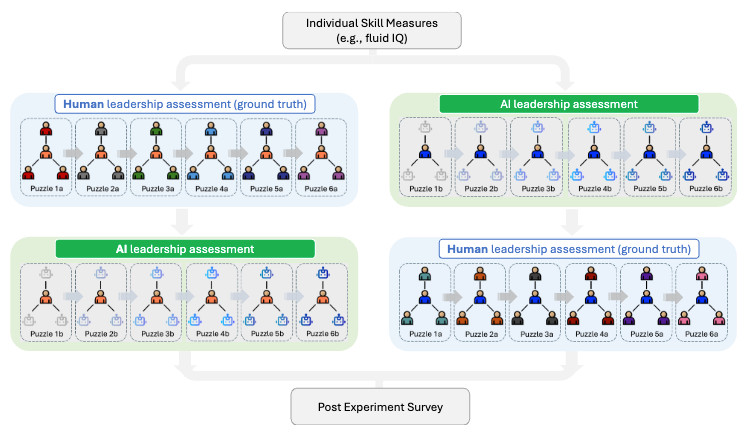
With agents, the leverage shifts to orchestration. High-performing leaders ask more questions, structure tighter turn-taking, and keep the interaction focused on extracting the right information at the right time. Success is less about tone or encouragement and more about clarity of constraints, disciplined probing, rapid verification, and explicit integration of outputs into a coherent decision.
In other words, human leadership is relational. Agent leadership is procedural. The leaders who outperform are those who can fluidly switch between the two, maintaining cohesion with people while running a tight control loop with machines.
The quality of those choices, and the speed at which they’re made, will increasingly determine performance. Otherwise, either your humans or your AI agents may rebel.
9. CMOs will be forced into fewer, harder strategic bets
AI raises the cost of indecision. As execution accelerates and competitive cycles compress, hesitation compounds. Boards and CEOs will push CMOs into sharper, more consequential choices: build versus buy, optimization versus differentiation, pilots versus full transformation, where humans remain essential and where automation becomes the default.
The era of hedging with endless experiments is ending. Not because experimentation lacks value, but because experimentation alone is no longer a strategy. Capital is tighter, patience is shorter, and AI-native competitors are scaling with structurally lower cost bases. In that context, perpetual pilots look less like prudence and more like drift.
There will be nuance. Organizational philosophy, industry dynamics, board pressure, and underlying business performance will all shape the tempo. A high-growth category leader has more room to test than a margin-constrained incumbent under activist scrutiny. But across contexts, the tolerance for vague progress is shrinking.
Strategy and brand differentiation will matter again because everything else is rapidly commoditizing. When tools converge and execution becomes abundant, advantage shifts to choice quality. The marketers who endure will be those who make clearer bets, earlier, and with a higher hit rate. In many organizations, the ability to place smarter, bolder bets, and to be right more often than not, will increasingly determine who stays in their role and who does not.
10. Jagged AI capabilities will create invisible failure modes
AI will work brilliantly in some contexts and fail unpredictably in others. Over-trust and under-trust will coexist inside the same organization and often within the same team. The most dangerous failures will not be obvious. They will be quiet, inconsistent, and driven by misplaced confidence.
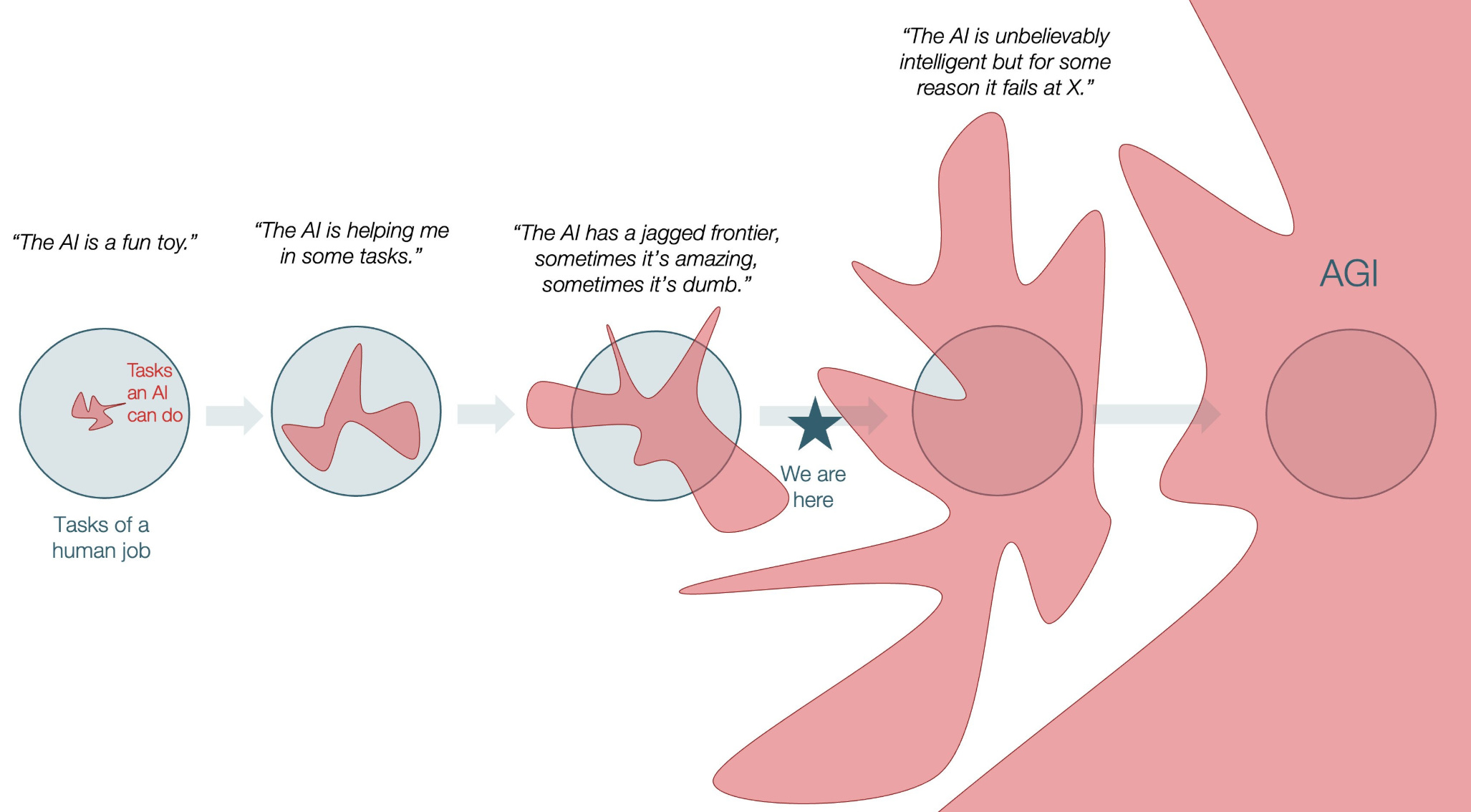
This is also why “anti-AI” positioning is emerging as an employee response. Some brands have started leaning into human-ness as a deliberate contrast to synthetic sameness, tapping into rising skepticism and fatigue. However, that too will be a mistake. As it’ll mean that those leaders won’t take advantage of AI capabilities that give themselves and their marketing teams superhuman powers.
By the end of 2026, every marketing organization will use AI in significant ways. But few will still be redesigned for it. The winners will not be those with the best tools, but those willing to confront identity disruption, ethical responsibility, workflow reinvention, and human leadership accountability head-on, then make the bold bets that follow.
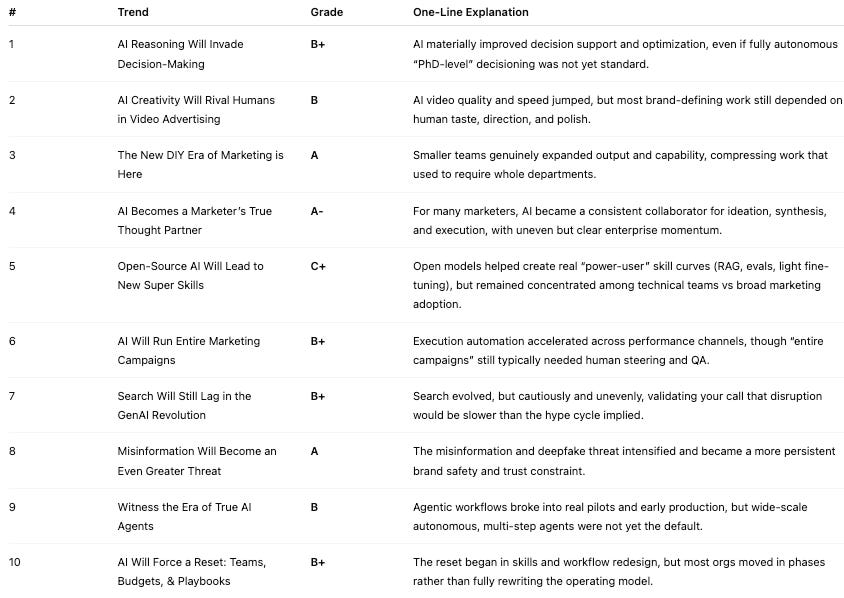
2025 Trends Graded by ChatGPT
What I’m reading
AI-powered search cut traffic by up to 60% (LinkedIn)
Machines Are Your Content’s New Audience (Forrester)
Call Your OpenClaw over the phone (ElevenLabs)
AI.com with SB ad promoting consumer agentic platform (Ad Age)
What I’ve written lately
Claude Picked a Fight at the Super Bowl (February 2025)
AI Everywhere, Wisdom Nowhere (January 2025)
Authenticity is Dead (January 2025)
The Wrong Code Red (December 2025)
Creativity’s Coming Reckoning (November 2025)
Shiv Singh is a C-suite advisor and CEO of Savvy Matters, helping business teams translate AI disruption into practical business and marketing strategies, organizational design, executive-ready roadmaps, and bespoke education programs. He is also the Co-Founder of AI Trailblazers, a vibrant community uniting marketers, technologists, entrepreneurs, and venture capitalists at the forefront of AI.
A former two-time Chief Marketing Officer and author of Marketing with AI for Dummies (4th print run, translated into five languages), he built his career at LendingTree, Visa, PepsiCo, and Expedia Group, and serves as a public-company board member of a Fortune 300 company and private investor.
Excellent, as always, Shiv! Echoes of your post to follow in some Substack and LinkedIn posting of my own...